
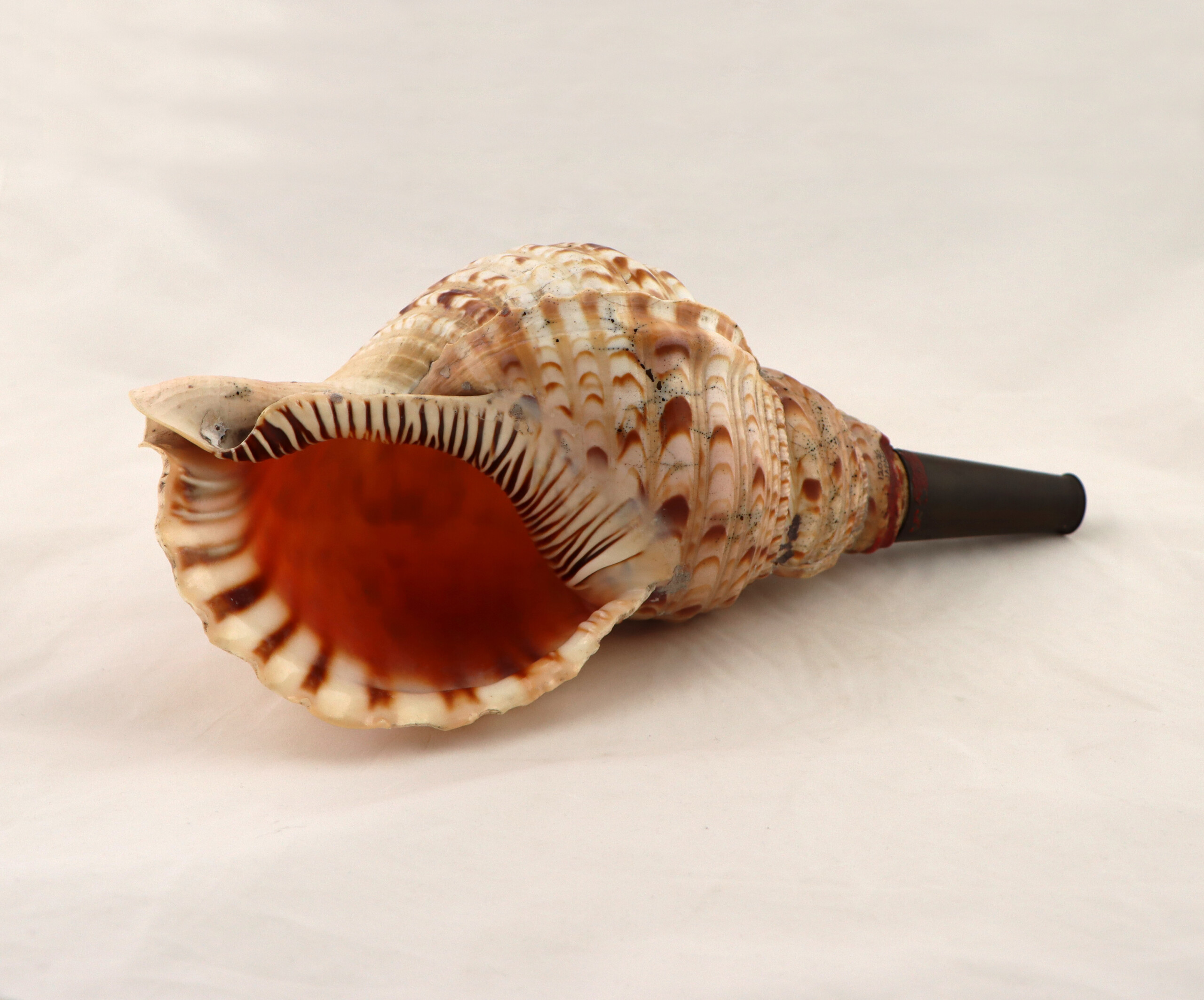
Conch shell trumpets have been present in Japanese history since the Nara Period (710-794 CE). The horagai, the name given to the traditional instrument, is a culturally significant musical tool in Japan because of its pitch frequency, unique shape, symbolism, and use in religious practices. The instrument's primary material, the shell, is from the Chronia [...]
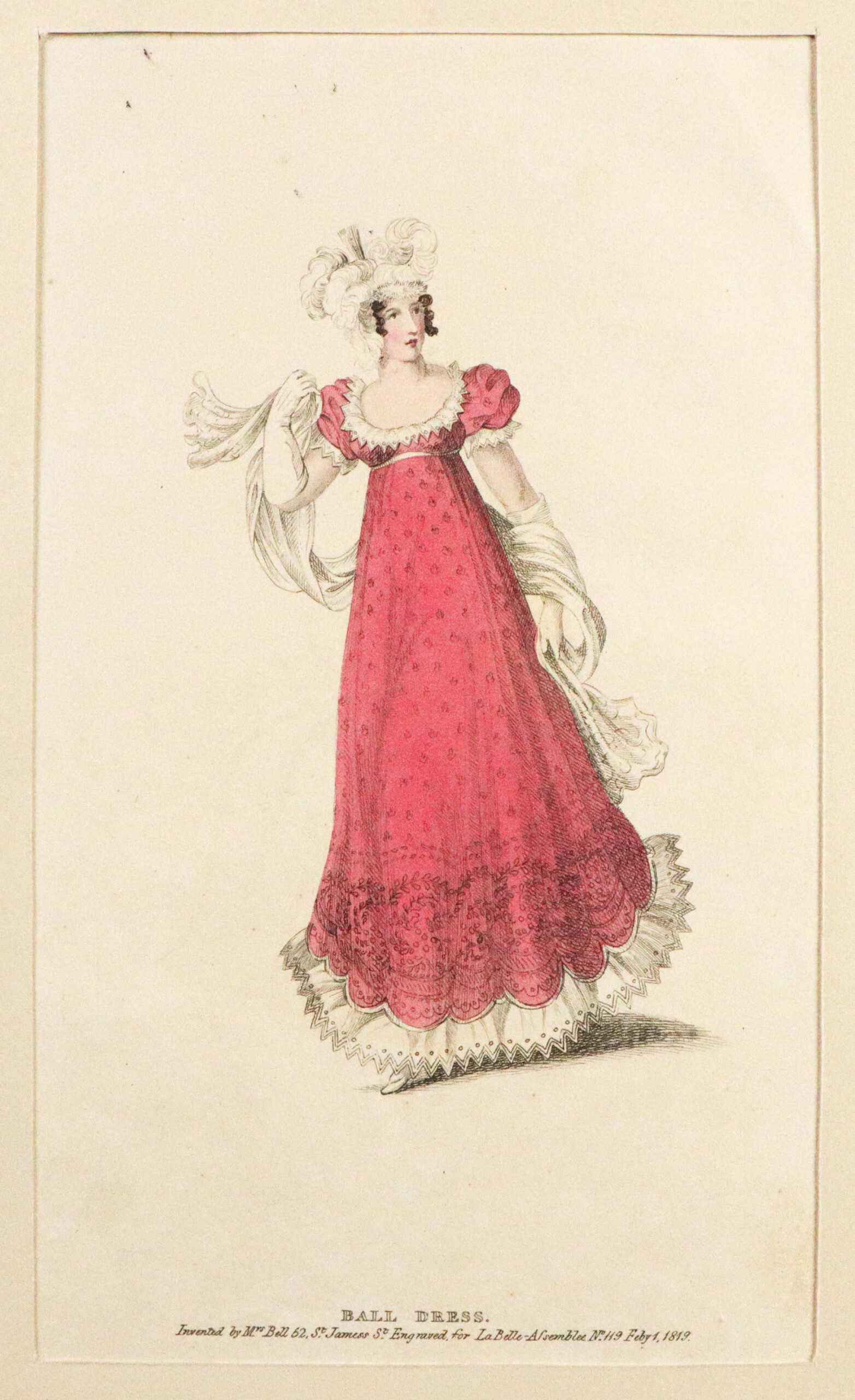
“Ball Dress,” Fashion Plate for “La Belle Assemblée”
Kelsey Malone2024-01-03T16:19:08-05:00Ball Dress is a print initially published in John Bell’s British women’s fashion magazine, La Belle Assemblée. This fashion plate pictures a wealthy, white, assumed-to-be married woman wearing a luxurious dress inspired by French fashion. It was created by “Mrs. Bell,” or Mary Ann Walker Bell, editor of the fashion section between 1810 and 1820 [...]
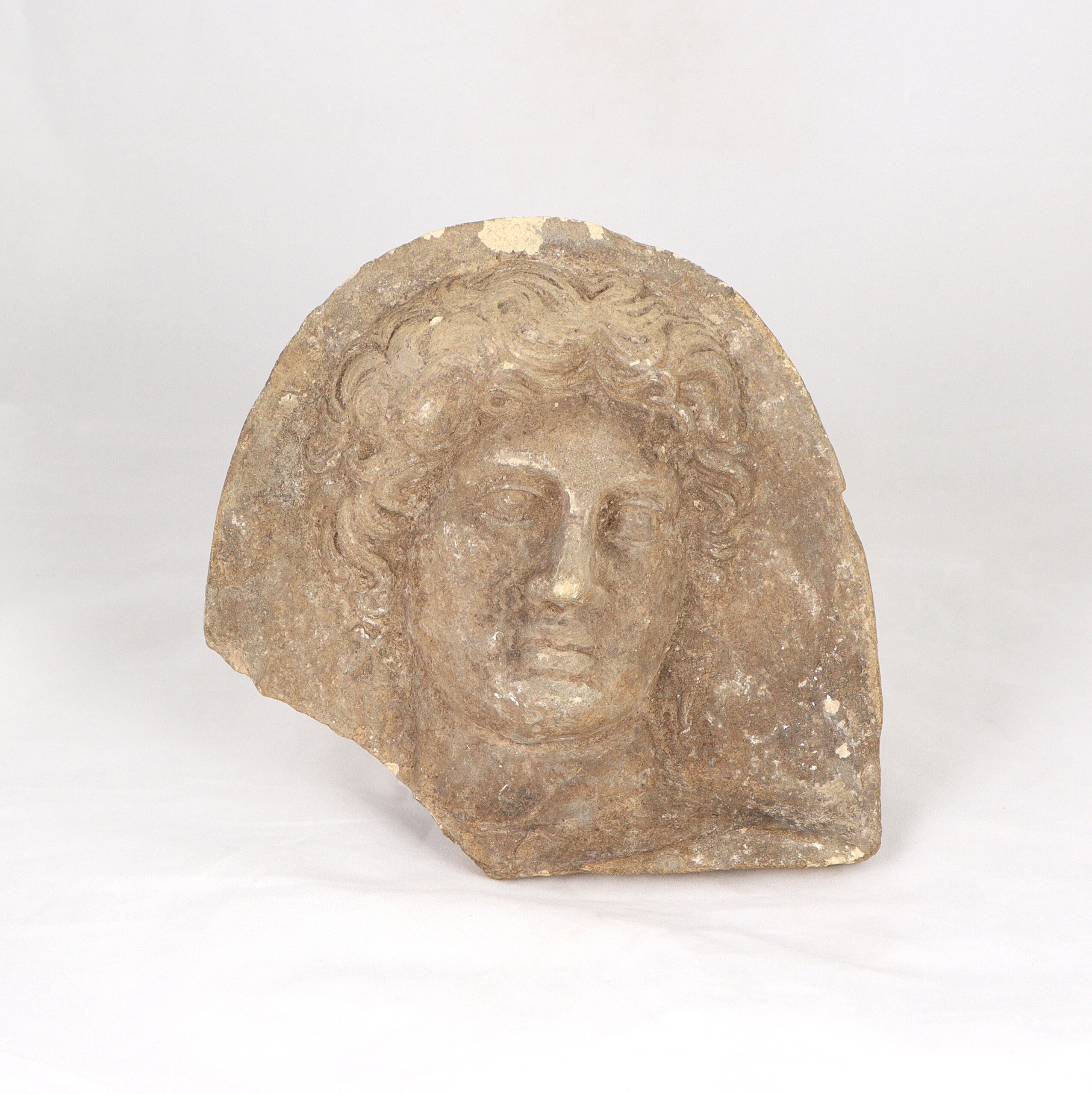
Sculpted Head in Relief
Kelsey Malone2024-01-03T16:05:25-05:00This relief sculpture of a head represents the emphasis on naturalism which came to its height during the Classical Era in the Mediterranean region. This piece has realistic human features, such as the striking detail in the eyes that glance right past the direct viewer. The curls that adorn the head and frame the face [...]
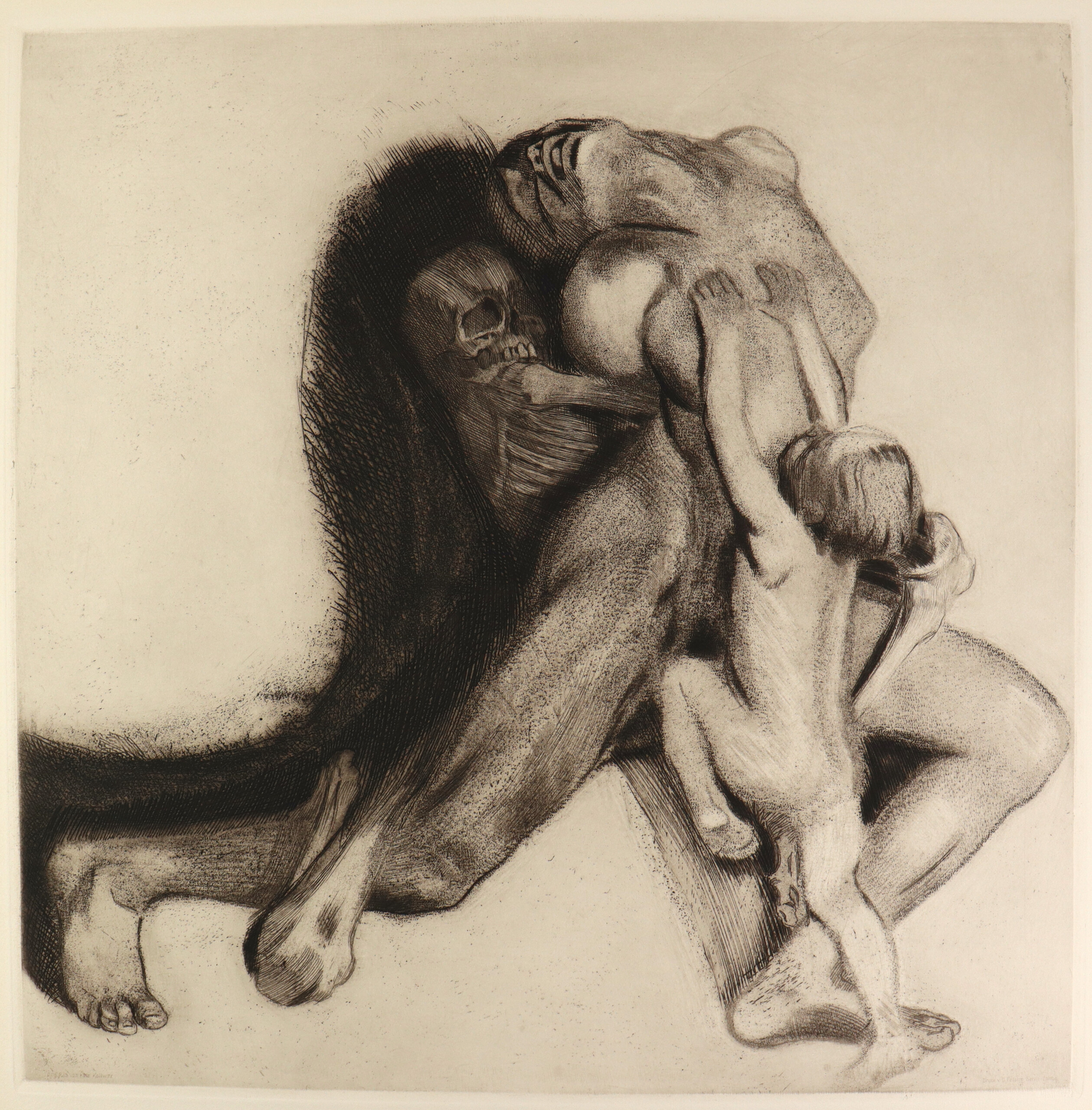
Tod Und Frau (Death and the Woman)
Kelsey Malone2024-01-03T15:49:40-05:00Käthe Kollwitz is considered one of the most notable European printmakers of the twentieth century. As a German artist who lived and worked during both world wars, Kollwitz’s artwork frequently features motifs of grief and loss. Tod Und Frau depicts a nude woman being trapped by Death as a child desperately reaches for her. Kollwitz [...]
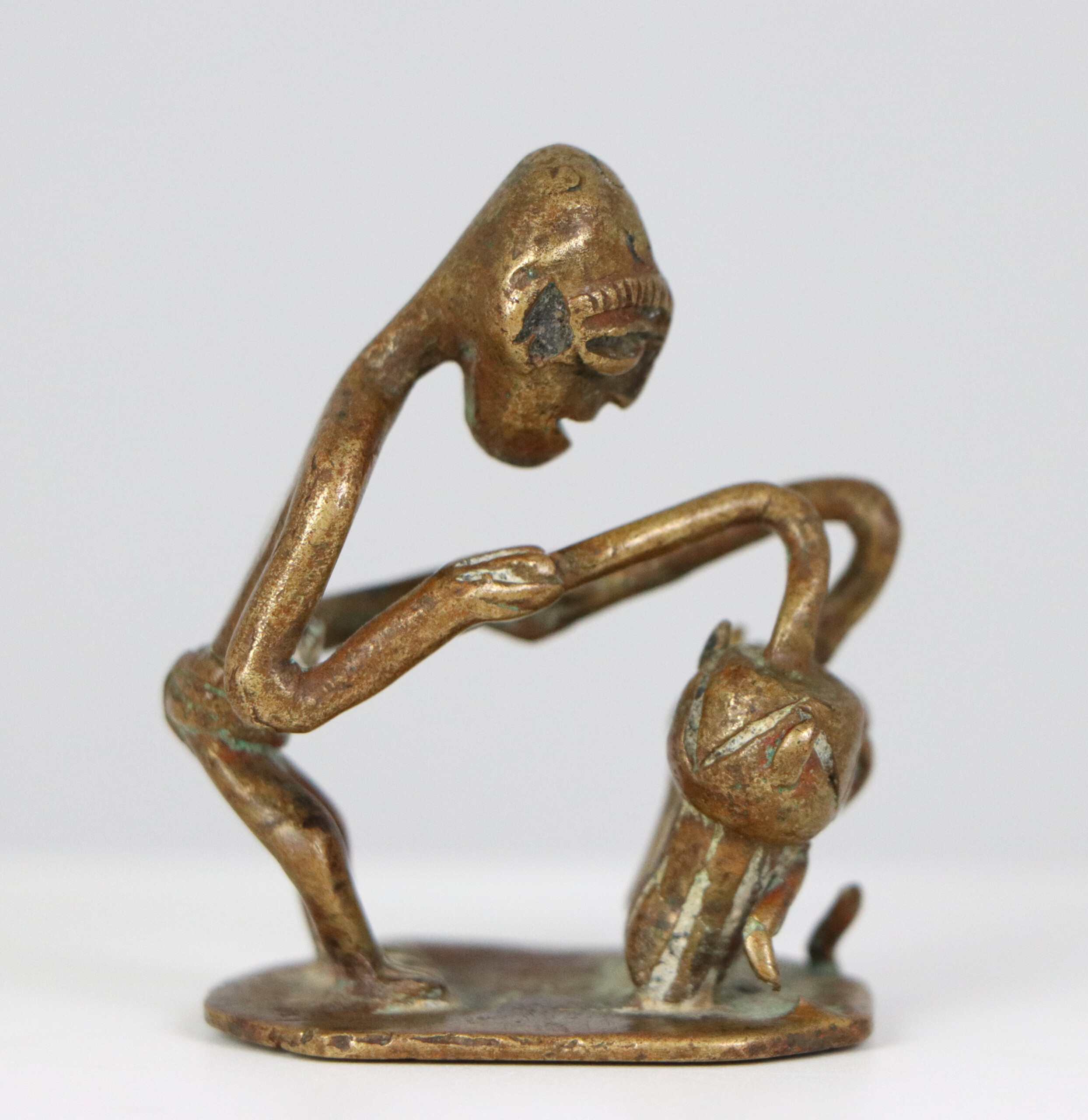
Drummer Abrammuo (Gold Weight)
Kelsey Malone2024-01-03T15:46:31-05:00The booming gold trade in Ghana led to the creation of abrammuo, or gold weights. Abrammuo were made of brass and were used to regulate the gold trade to allow for a greater degree of accuracy that was much needed from the 14th century onwards. This abrammuo takes the form of a drummer. The meticulous [...]
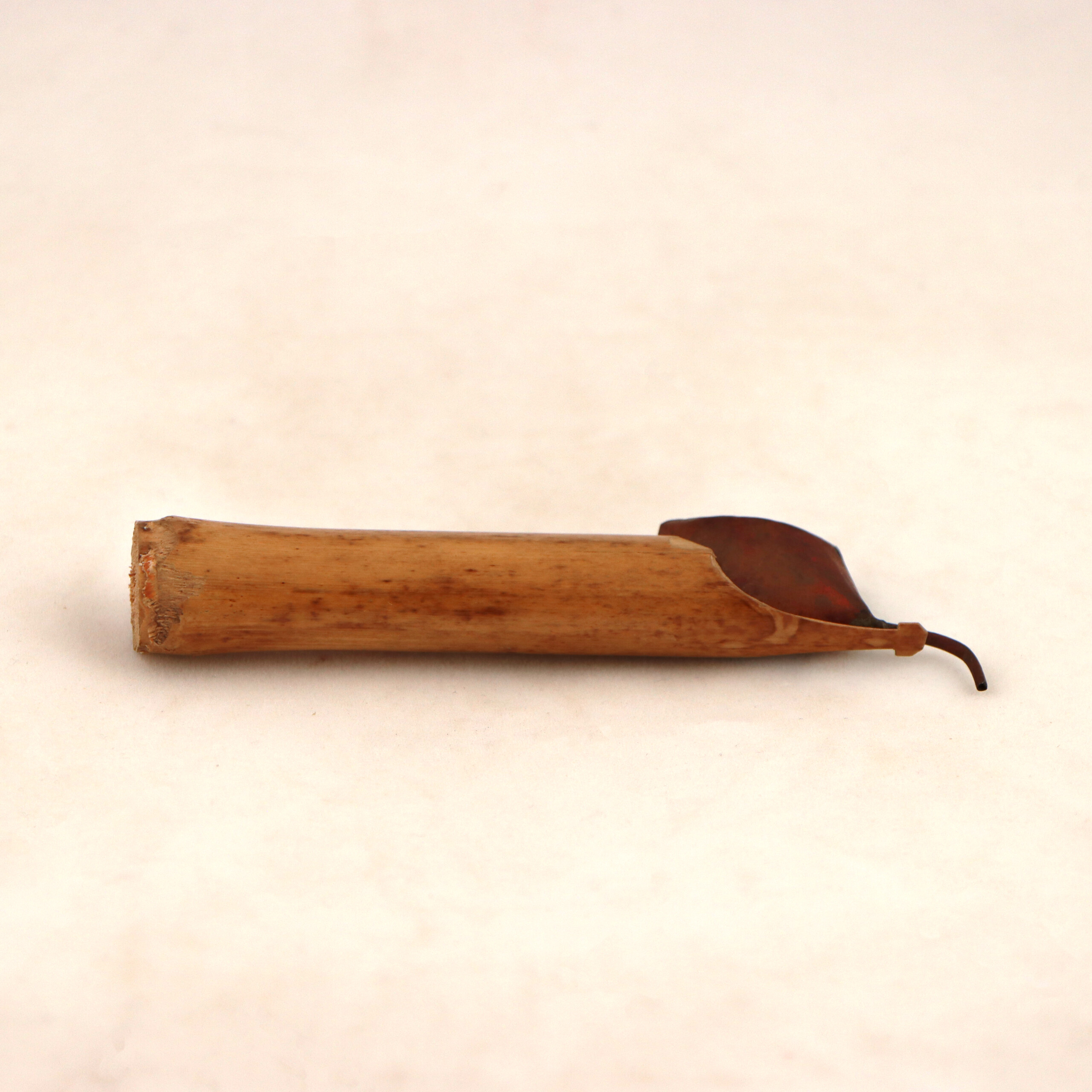
Tjanting
Kelsey Malone2024-01-03T15:27:49-05:00A tjanting is a tool used in making tulis batiks, traditional Javanese fabrics patterned with wax. The tjanting holds hot, liquid wax in the copper wax reservoir. When placed in the dye, the waxed area remains the color of the fabric. Tjantings have a variety of tips, sizes, and number of spouts to pattern the [...]
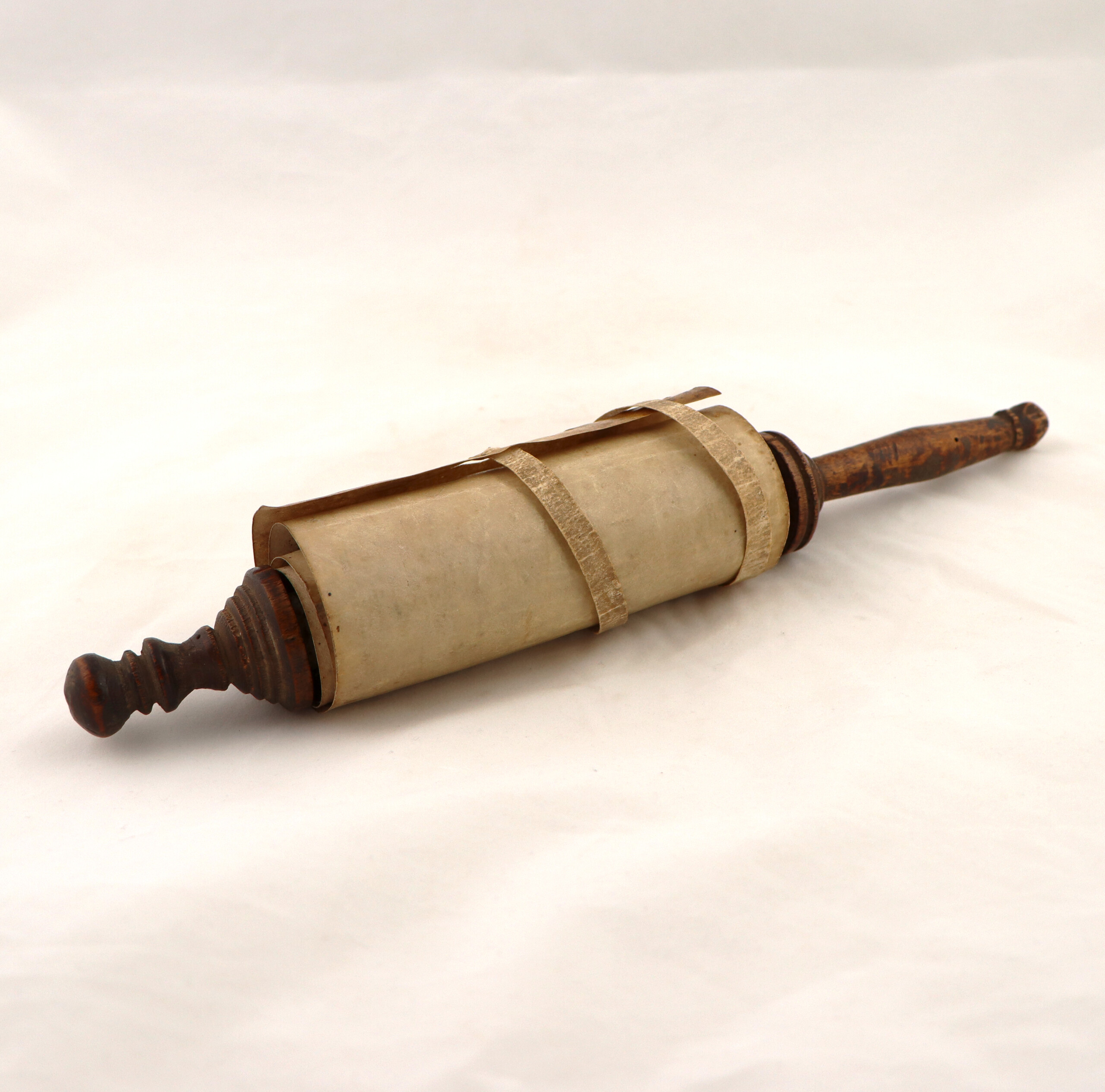
Megillat Esther
Kelsey Malone2024-01-03T16:41:32-05:00There is no telling what exactly this little scroll has seen in its lifetime, or where its journey has taken it. It has likely seen the bustling and tense streets of an early twentieth century Jerusalem, when it was sold to an American tourist there and brought to Kentucky. Was it made to be sold [...]
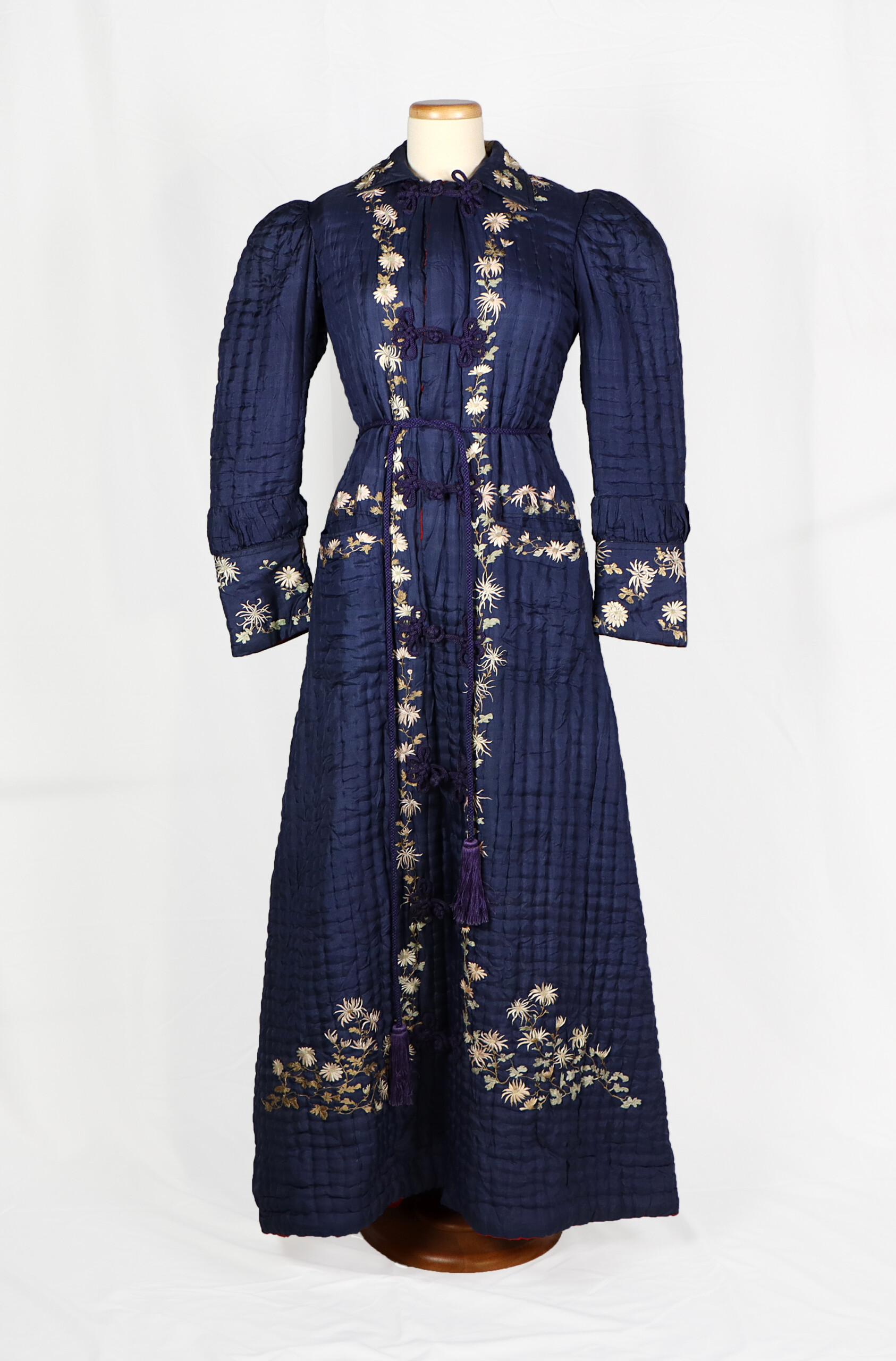
Dressing Gown
Kelsey Malone2024-01-03T15:16:02-05:00This quilted Japanese dressing gown is made of blue and red silk with a wool inner layer. The hems, plackets, back belt loop, and pockets are embroidered with flowers. This degree of detail would have made the garment quite expensive, although the mechanization of silk production in the latter half of the century made silk [...]
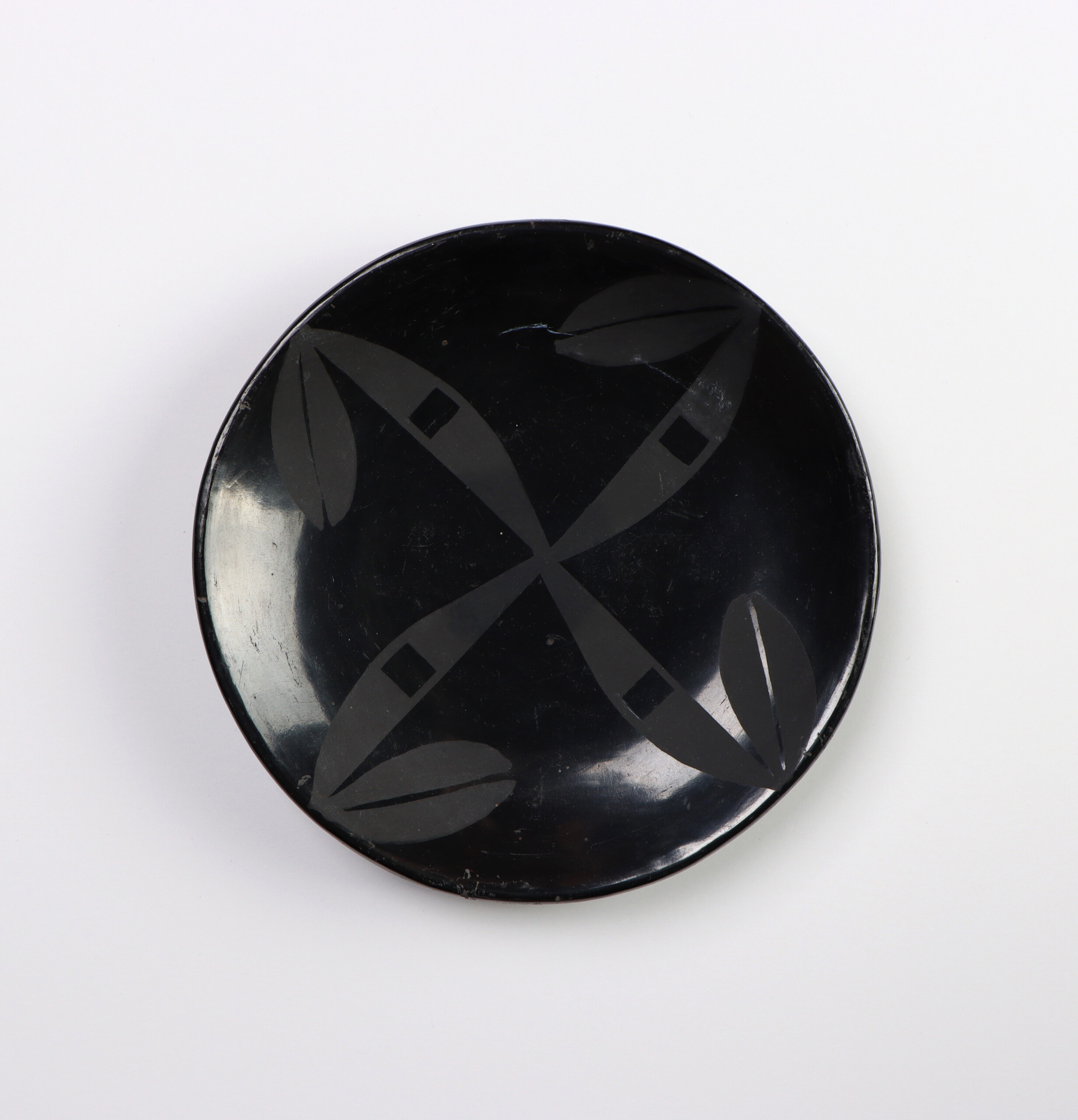
Dish
Kelsey Malone2023-12-15T15:07:26-05:00As a teenager, Maria Montoya Martínez learned how to make pottery from artists in her San Ildefonso Pueblo community in present-day New Mexico, the birthplace of black-on-blackware pottery. Today, she is celebrated for her “rediscovery” of this historic style of ceramics, which had declined in use amongst Pueblo potters beginning in the early 1800s. Martínez [...]
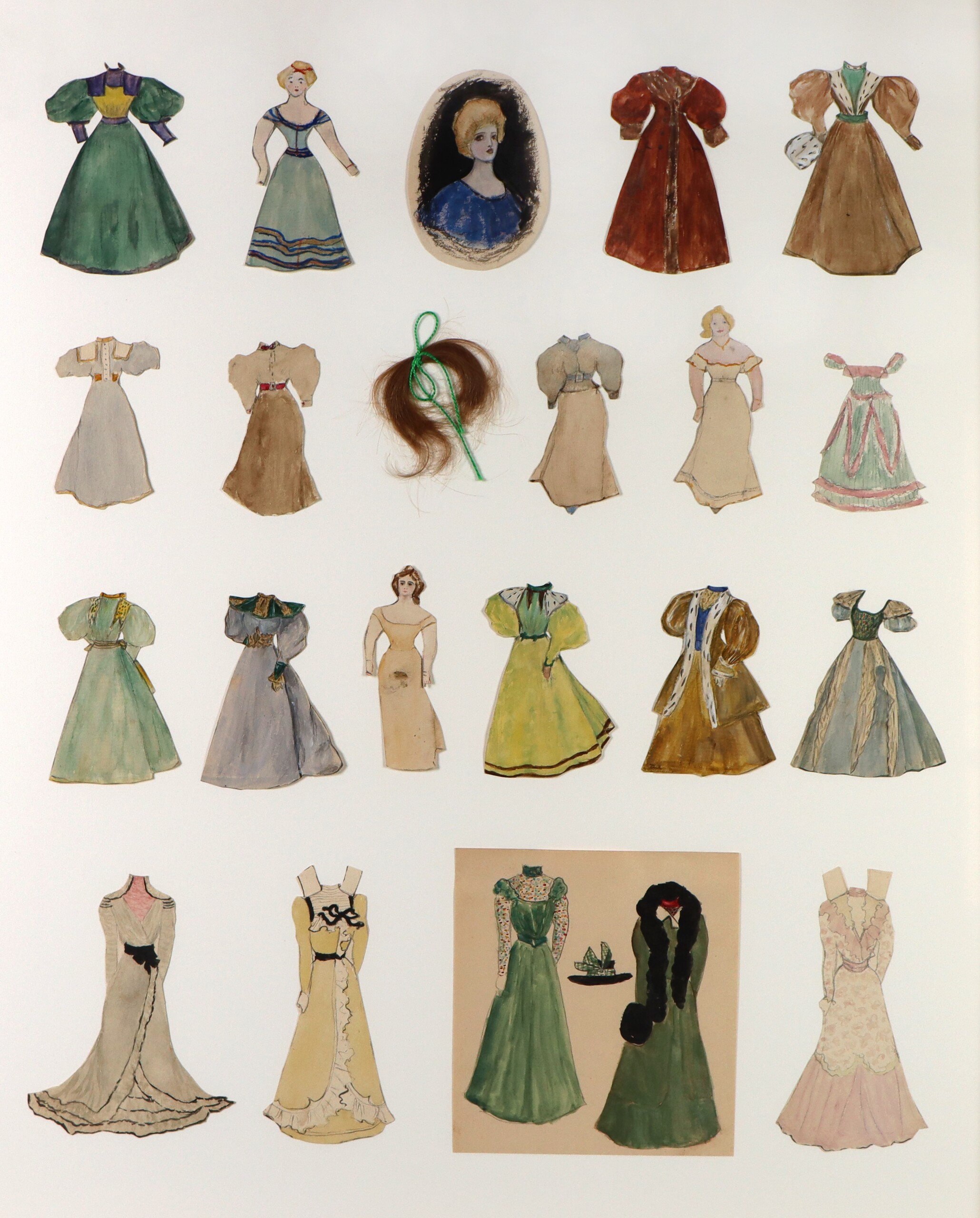
Paper Dolls I
Kelsey Malone2024-01-03T14:54:17-05:00What do you think you would look like as a doll? This collection of paper dolls and dresses were made in 1898 by American artist and feminist activist Emily Grace Hanks when she was only twelve years old. The tiny waists, ballooning sleeves, and luxurious fabric of these paper dresses reflect common fashion trends among [...]