
Project Description
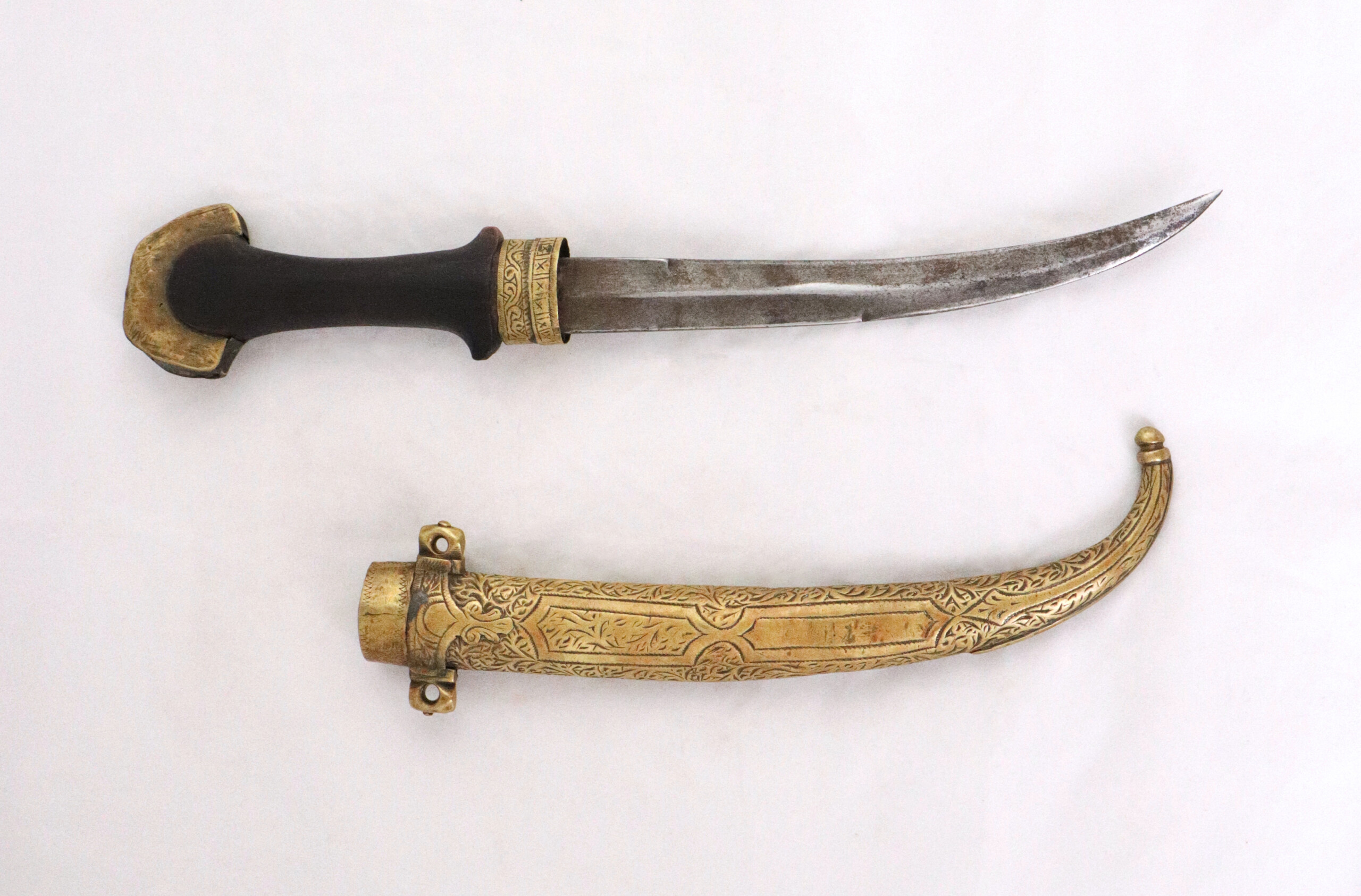
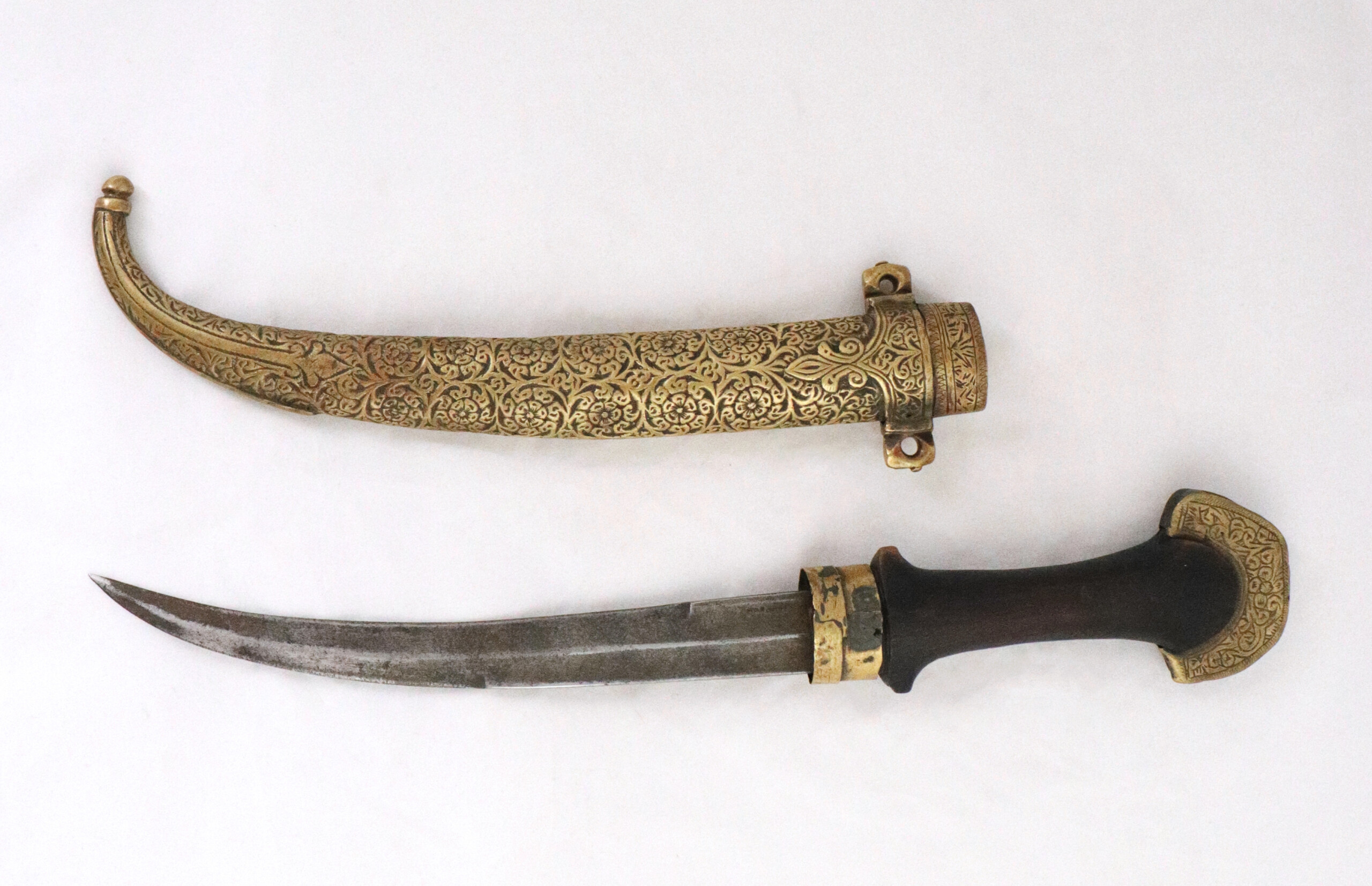
This dagger is one of many of its class categorized by its use of curved blades and scabbards (the blade cover). This type of blade was prevalent in the northwestern region of Africa, spanning from Morocco to northeastern Yemen. The scabbard features a tight, sharp, spiraling, floral pattern across the front, with a spearhead design as it approaches the handle. Part of its design includes the sharp, curved blade, which was intended to appear intimidating to those who saw it. The design is inspired by the tusks of boars, which were revered for their aggressiveness and believed to bring protection from evil. Other daggers also exhibit this characteristic, including the Jambiya from Yemen and the generic khanjar. These two daggers share many similar characteristics while keeping many subtle differences in their identities.
The scabbard features a smoother, rectangular, shield-like design across the back; this part of the object has received some wear over the many years it has existed. The blade had two primary purposes: combat and fashion. The blade had seen the rise of World War I, which caused many men to carry it around for self-defense. The scabbard features two prominent holes on the side, closer to the handle, which were intended to be strung from a carrying strap. These straps allowed people to wear the dagger around decoratively, as it was used to display masculinity in men who carried it.
– Julius Fritz (Berea College Class of 2027), ARH 263: Intro. to Museum Work, Fall 2025