
Project Description
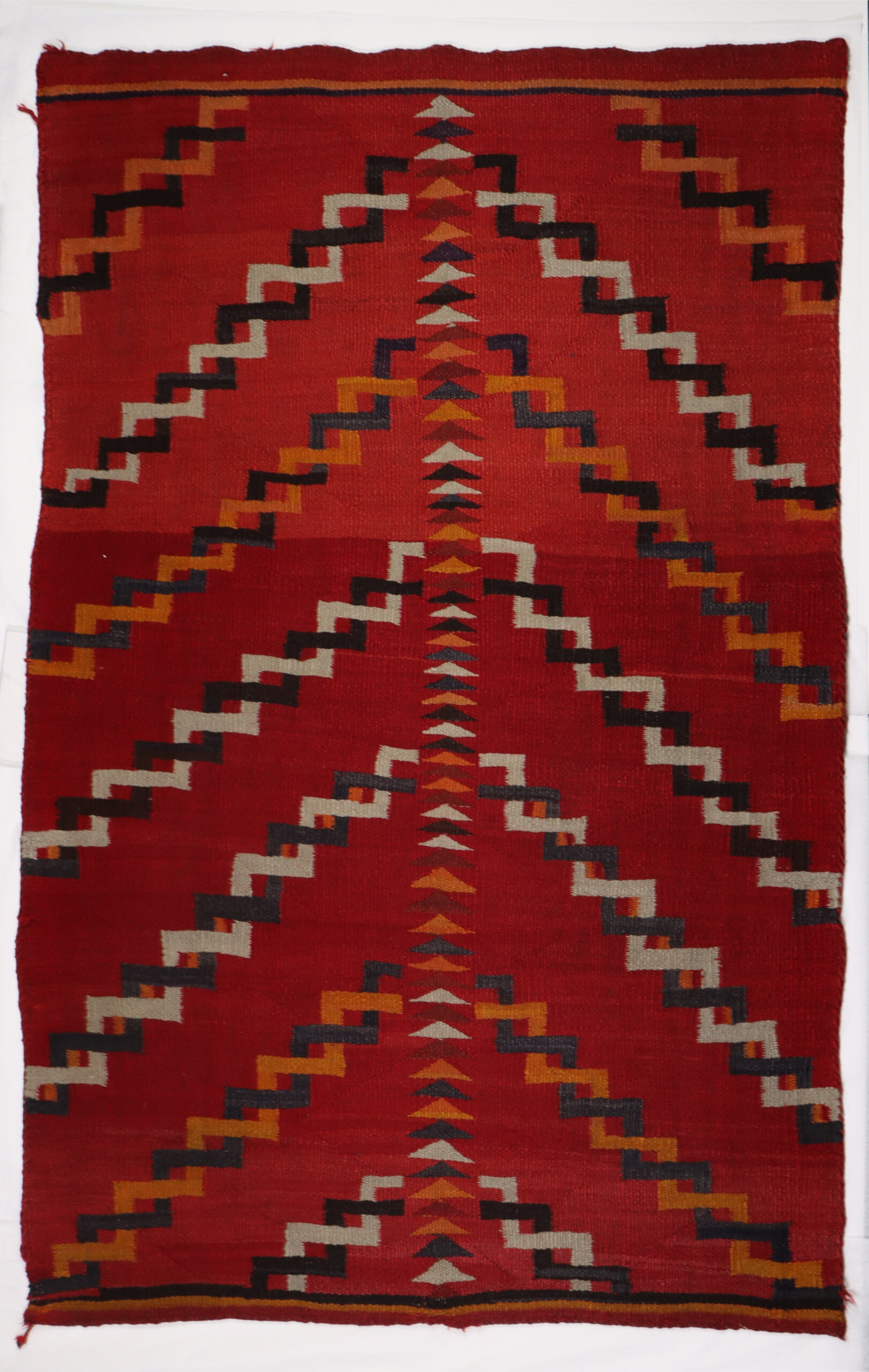
The Diné people are a historically oral culture, meaning they pass on story, myth, and history within material culture and spoken word rather than written documents. Through items such as dance, pottery, or textiles, cultural history is remembered and retold. From 1864 to 1866 the Diné people were incarcerated at Fort Sumner in New Mexico when American colonizers forcibly took their land. No longer able to garden, forage, or care for their herds, the Diné survived by weaving and selling blankets. The story of the march to Fort Sumner and the return journey is often recorded in woven rugs with stair step zigzags like those seen in this rug in the College’s collection, illustrating the idea of a journey.
Diné blankets were highly sought after in the early 1800s for their warmth, water resistance, and durability. In 1850, a Diné blanket could sell for fifty dollars, which is about two thousand dollars today. These textiles were originally called blankets and used as saddle blankets or as clothing until the late 1800s when commercial yarn became available and the blankets were made for tourists and for trade. By the early 1900s, Diné weavers were fulfilling the demand for colorful rugs by using cheaper materials and weaving in standard sizes though still maintaining their distinctive cultural style and beauty.
– Anita Thiessen Berea College Class of 2026), ARH 263: Intro. to Museum Work, Fall 2025